Clinical Overview
What is HypoPARAthyroidism?
Defined as hypocalcemia in the presence of an undetectable, low, or insufficient parathyroid hormone (PTH) level.
Confirmed by blood tests on 2 occasions, at least 2 weeks apart.
Abnormalities that support diagnosis:
- Hyperphosphatemia
- Low serum level of 1,25 dihydroxy Vitamin D
- History of thyroid or neck surgery
- High 24-hour urine calcium levels
- Caution - Biotin (vitamin B7) intake can lead to falsely low PTH values in a few assays
Postsurgical hypoPARA is considered permanent (chronic) if it persists >12 months after surgery.
Types of HypoPARAthyroidism
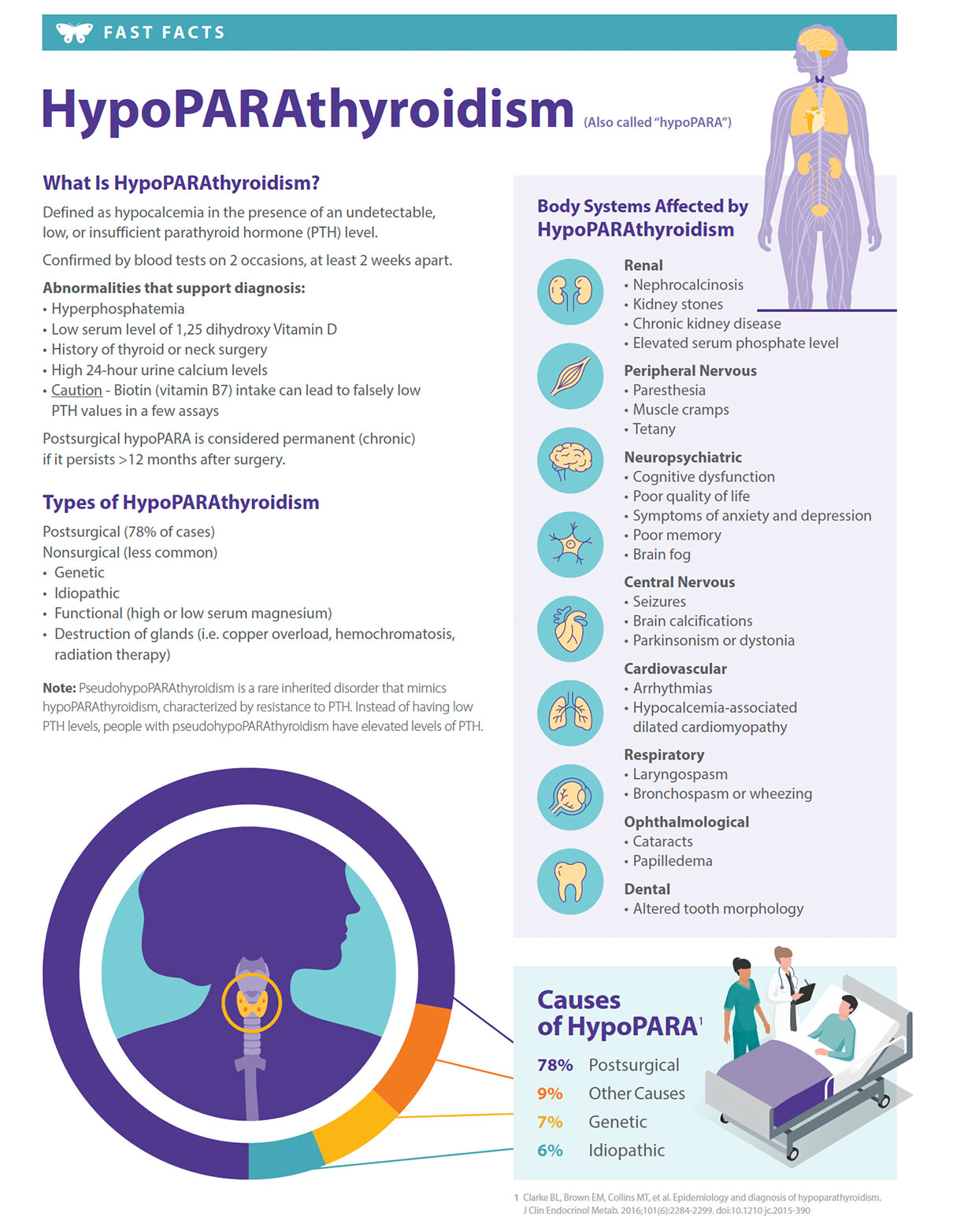
Postsurgical (78% of cases)
Nonsurgical (less common)
- Genetic
- Idiopathic
- Functional (high or low serum magnesium)
- Destruction of glands (i.e. copper overload, hemochromatosis, radiation therapy)
Note: PseudohypoPARAthyroidism is a rare inherited disorder that mimics hypoPARAthyroidism, characterized by resistance to PTH. Instead of having low PTH levels, people with pseudohypoPARAthyroidism have elevated levels of PTH
Causes of HypoPARA
- Nonsurgical (~25% total pool): Combined make up the remaining quarter of patients broken down unevenly across specific non-acquired triggers:
- Genetic (~10% to 12.5%): Inherited gene mutations or developmental syndrome like DiGeorge syndrome.
- Autoimmune & idiopathic (~12.5% to 15% combined): Immune system destruction (such as Autoimmune Polyglandular Syndrome Type 1) and true idiopathic cases where no clear cause is found despite testing.
Body Systems Affected by HypoPARAthyroidism

Renal
- Nephrocalcinosis
- Kidney stones
- Chronic kidney disease
- Elevated serum phosphate level

Peripheral Nervous
- Paresthesia
- Muscle cramps
- Tetany

Neuropsychiatric
- Cognitive dysfunction
- Poor quality of life
- Symptoms of anxiety and depression
- Poor memory
- Brain fog

Central Nervous
- Seizures
- Brain calcifications
- Parkinsonism or dystonia

Cardiovascular
- Arrhythmias
- Hypocalcemia-associates dilated cardiomyopathy

Respiratory
- Laryngospasm
- Bronchospasm or wheezing

Ophthalmological
- Cataracts
- Papilledema

Dental
- Altered tooth morphology
PTH Therapy
In August 2024, the FDA approved YORVIPATH® — a prodrug of parathyroid hormone (PTH), administered once-daily, designed to provide continuous exposure to active PTH over the 24-hour dosing period — the only FDA-approved treatment for hypoPARA. For more information, visit www.yorvipath.com.
Therapies in the pipeline:
Eneboparatide Alexion.com
Encaleret Bridgebio.com
Canvuparatide MBXBio.com
SEP-479 Septerna.com

Conventional Therapy
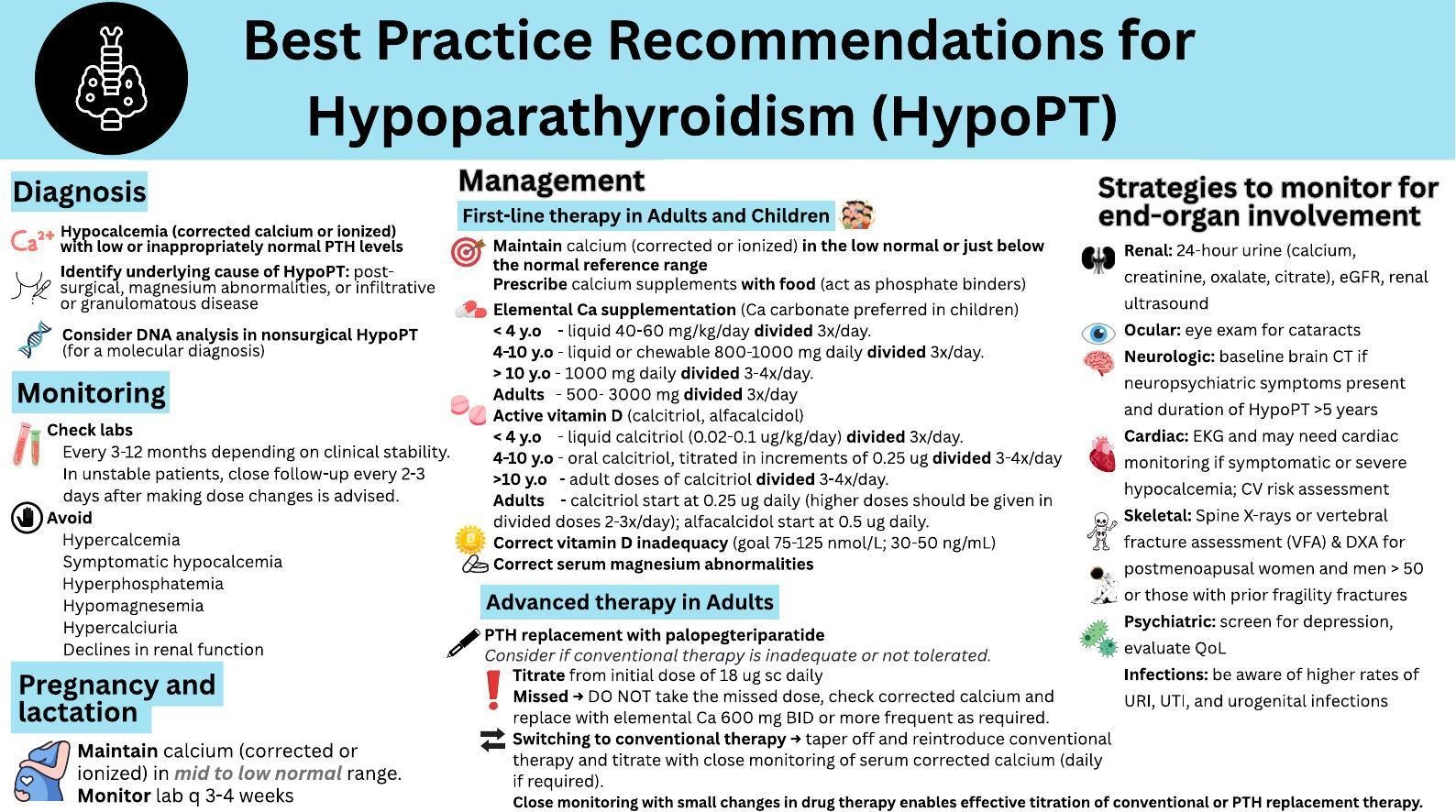
Goal of conventional therapy with calcium and active vitamin D is to raise serum calcium into the lower half of or just below the normal reference range, alleviate symptoms of hypocalcemia, avoid hypercalciuria, and maintain normal serum phosphate level.
- Calcium citrate or calcium carbonate
- Not more than 500mg–600mg per dose.
- Best taken with meals to control serum phosphate levels.
- Vitamin D analogues: calcitriol or alphacalcidiol
- Consider cholecalciferol or ergocalciferol to maintain 25-hydroxyvitamin D (25(OH)D) levels in normal range.
Routine Monitoring
Every 3-4 months
- Serum calcium (albumin corrected or ionized)
- Magnesium
- Serum creatinine/eGFR
- Phosphate
Every 6-24 months
- 24-hour urine calcium and creatinine
- 25 OH(D)
Baseline Tests
- Renal imaging with ultrasound and or x-ray (KUB)
- Eye exam
Repeat Tests
- Renal imaging if patient has kidney stones or kidney disease and or high 24- hour urine calcium levels (>400mg/day and or low urine citrate levels (<300 mg/day), calcifications or stones on imaging, or declining renal function.
- Ophthalmologic exam if visual symptoms

Additional Tests
- DXA BMD (Dual X-ray absorptiometry bone mineral density) is not needed routinely and may in fact not reflect bone strength accurately given most hypoPARA patients tend to have overly dense bones without a high fracture risk.
- Risk of worsening hypocalcemia: In hypoPARA patients who also have osteoporosis, BE VERY CAUTIOUS USING BISPHOSPHONATE RX*s (such as Reclast®, Fosamax®, Actonel®, or Boniva®) as well as Prolia® (denosumab) DUE TO THE RISK OF HYPOCALCEMIA!