ADH1
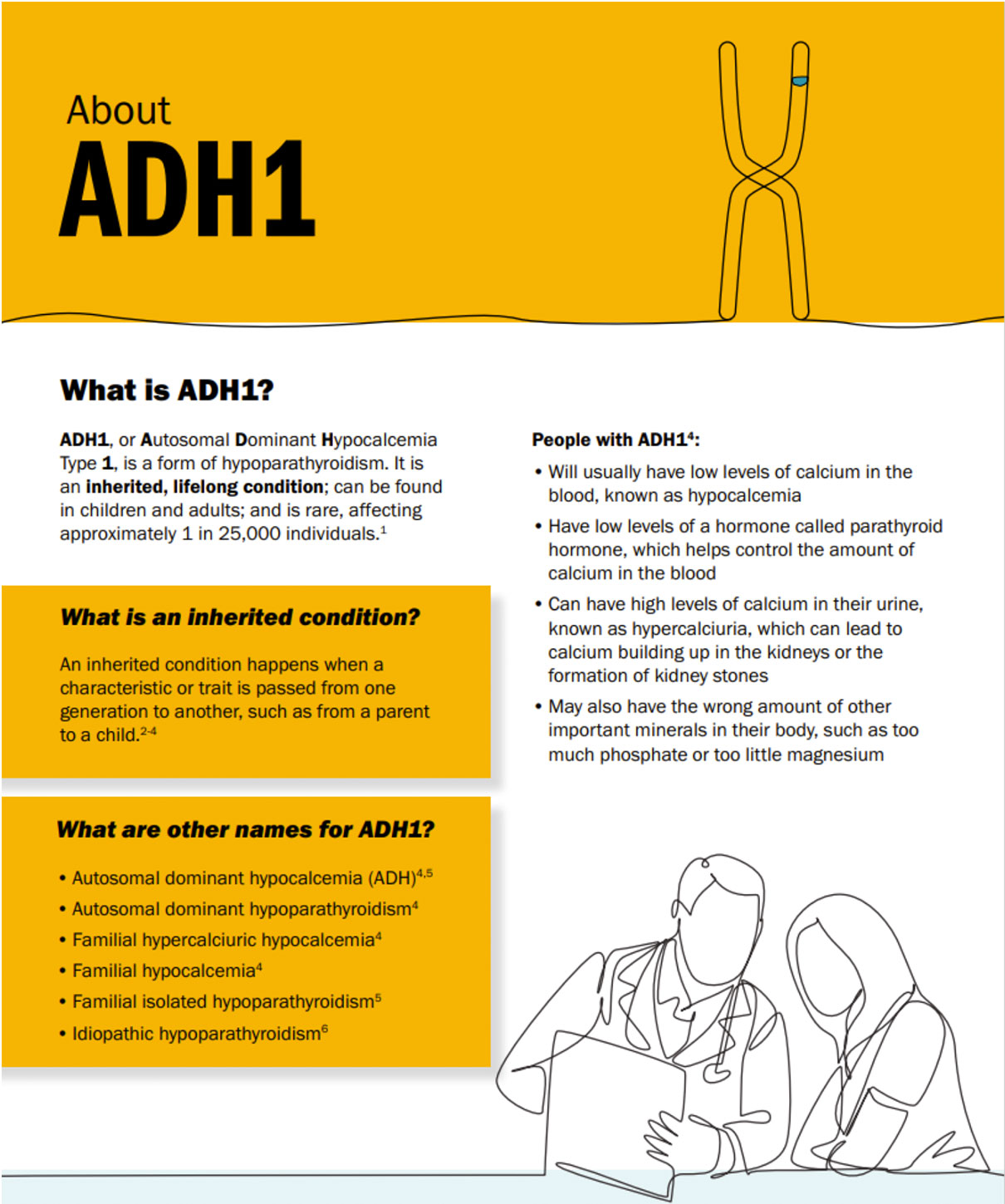
Autosomal dominant hypocalcemia type 1 (ADH1) is a rare genetic condition but a common cause of nonsurgical hypoparathyroidism
ADH1 is a distinct form of hypoparathyroidism
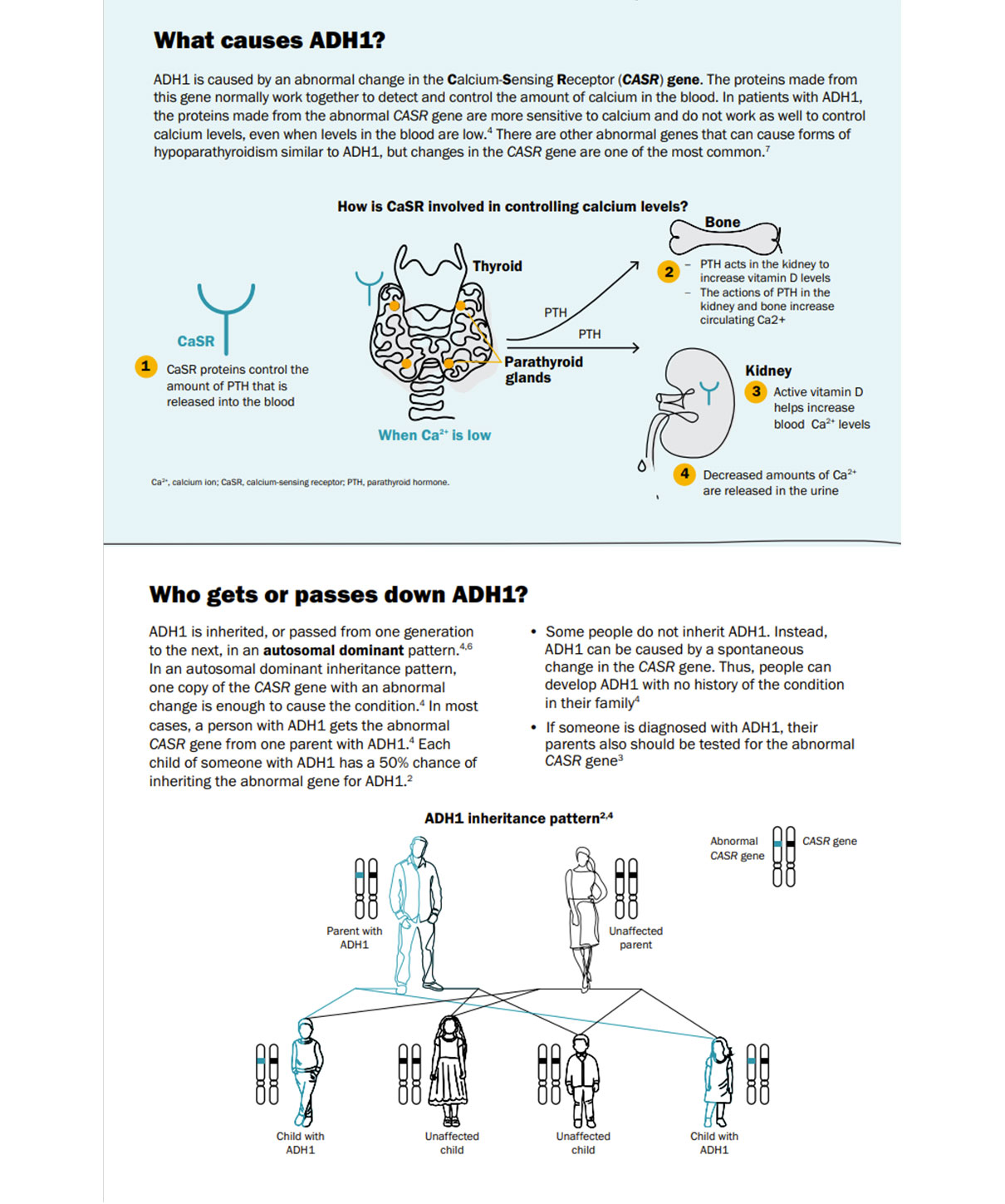
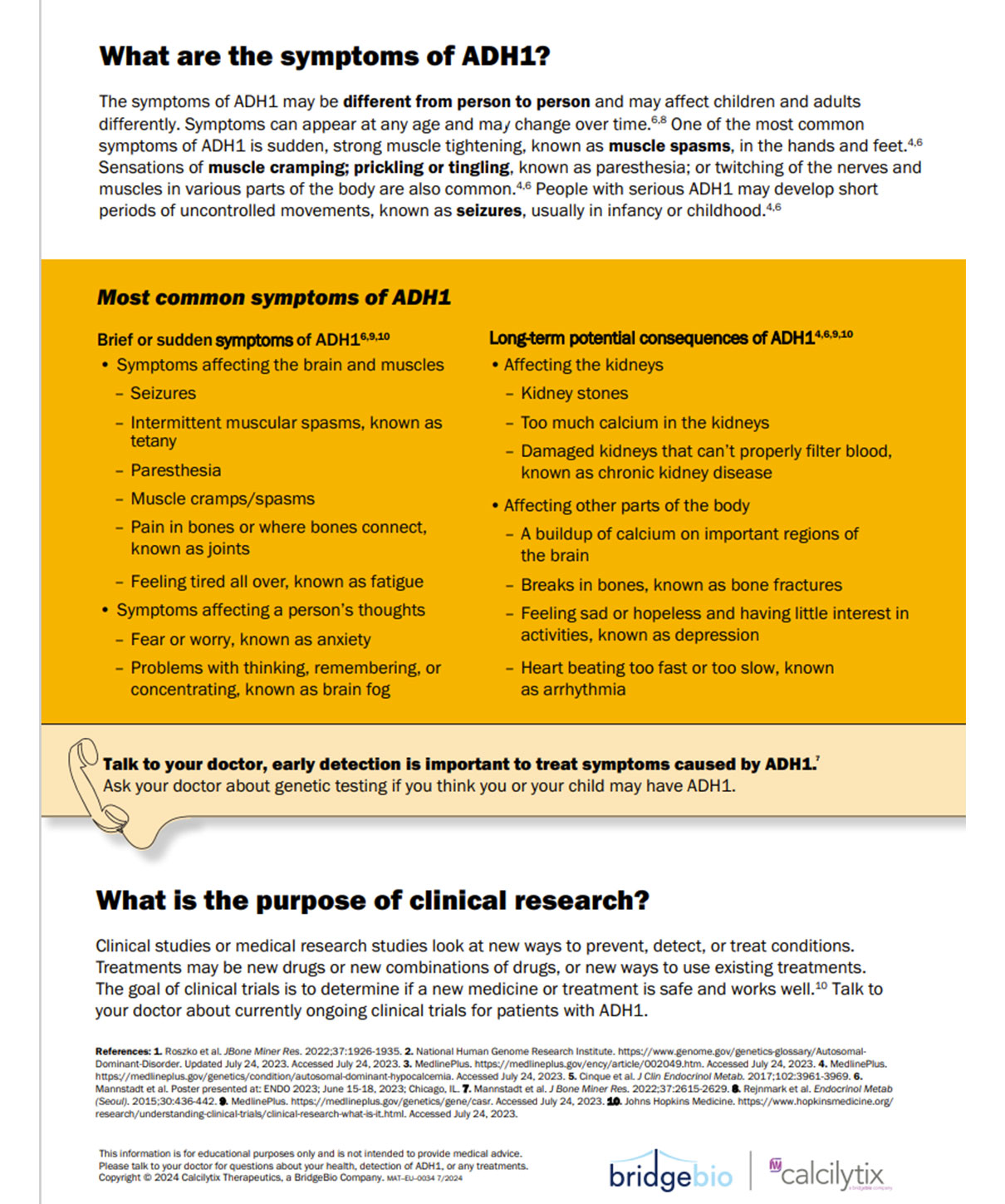
Hypoparathyroidism can result from surgical or nonsurgical etiologies, which include genetic disorders.1 ADH1 is a genetic form of nonsurgical hypoparathyroidism caused by gain‑of‑function variants in the calcium-sensing receptor gene (CASR), of which over 100 are known.
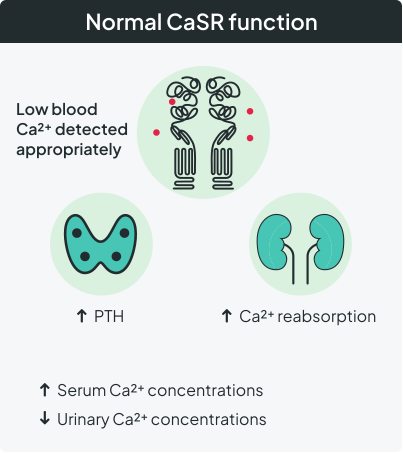
Variants in the calcium-sensing receptor (CaSR) are responsible for:
- Reduced PTH secretion
- Reduced renal calcium reabsorption
The mechanism of disease in ADH1 is distinct from that of other forms of hypoparathyroidism because of the critical role of the CaSR in both the parathyroid glands and kidneys.
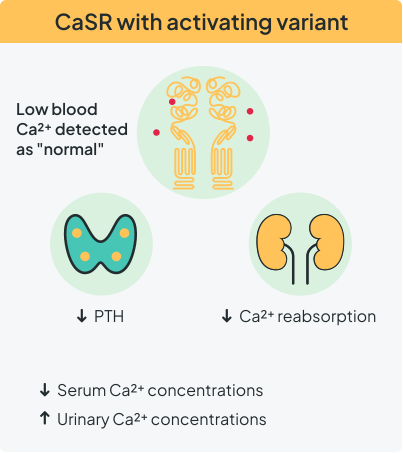
Gain‑of‑function variants in the CASR gene are the root cause of ADH1
These CASR variants cause the CaSR to be overly sensitive to calcium, thereby causing it to detect low blood calcium concentration as "normal." This leads to decreased PTH secretion from the parathyroid glands and decreased calcium reabsorption in the kidney—the result is:
- Low blood calcium concentration (hypocalcemia) and high (hypercalciuria) or inappropriately normal urine calcium concentration
MORE INFO available ADH1.com
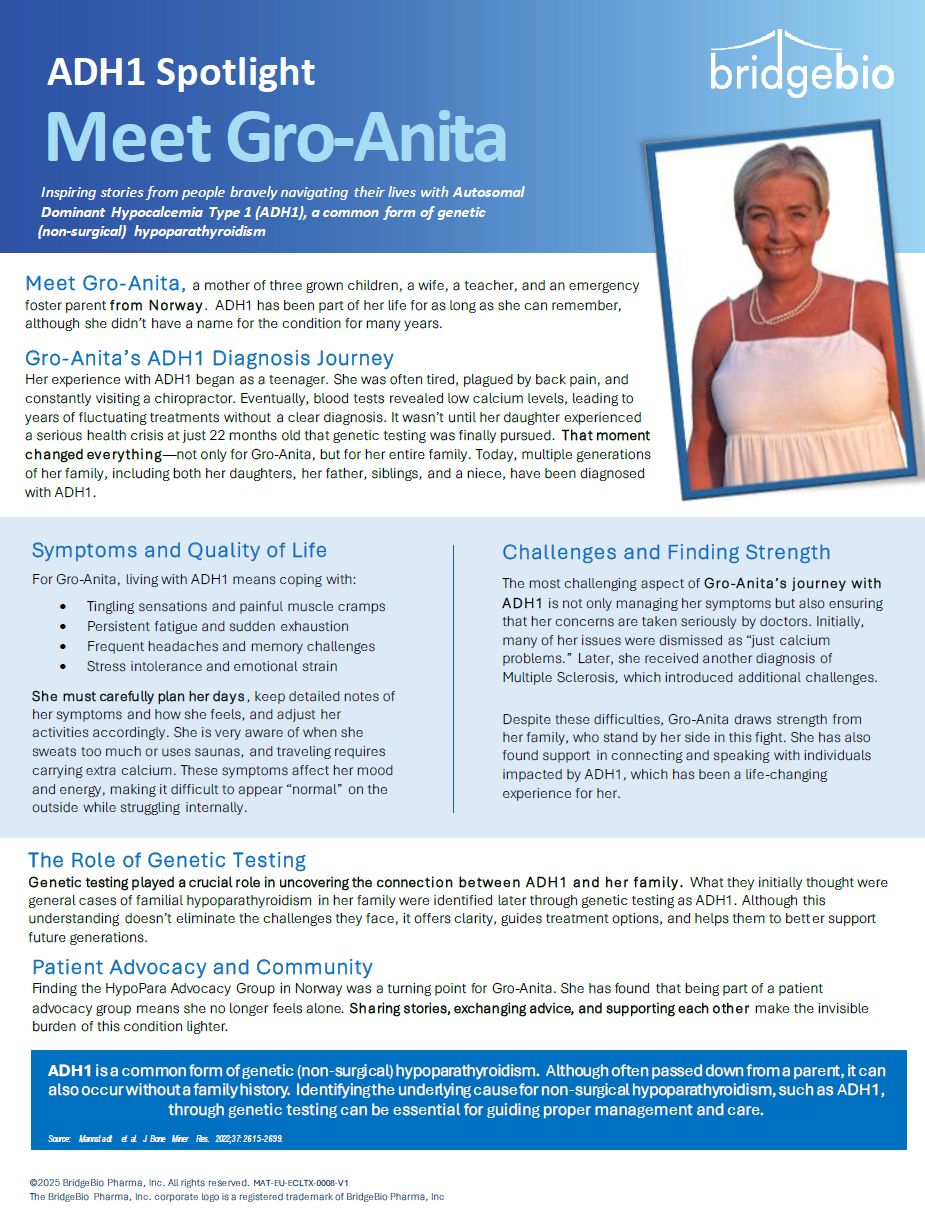
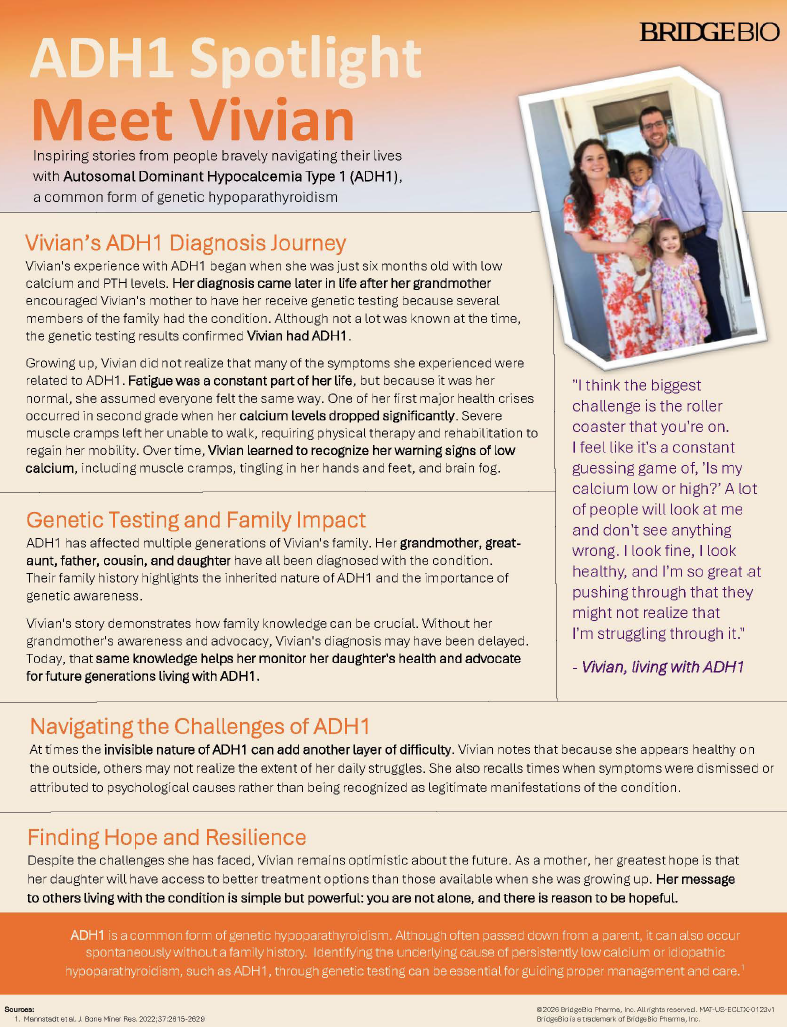
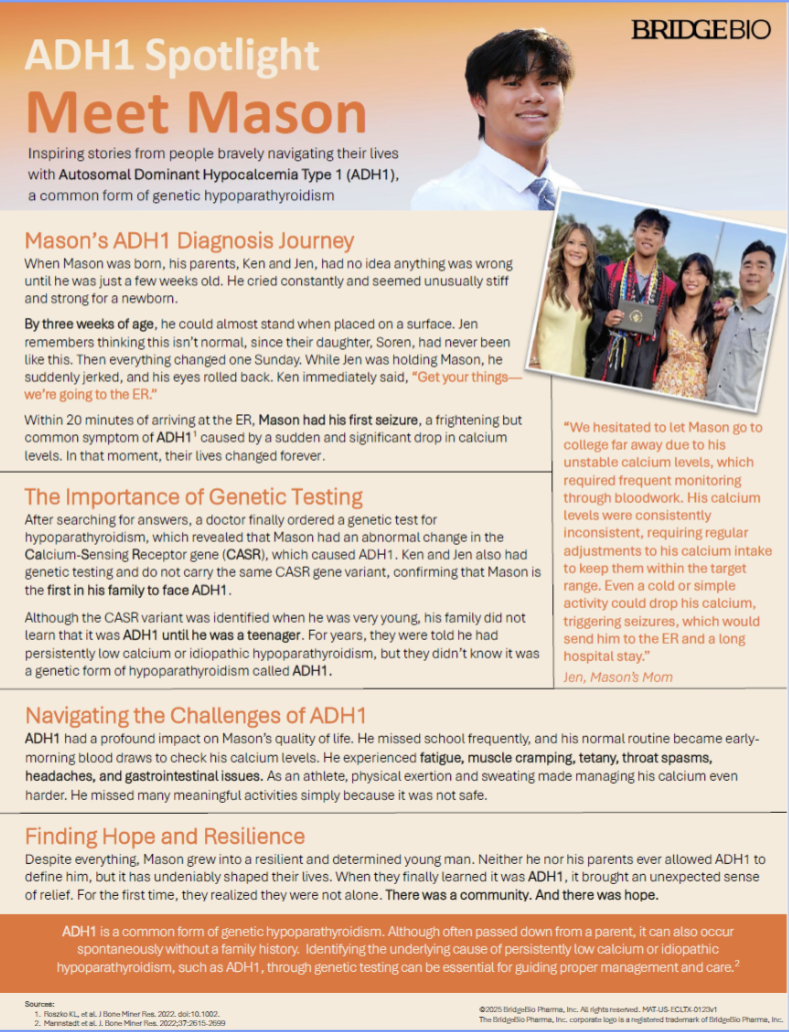
ADH1 Patient Stories